A Year of Fractures
The succession of days and months generally offers the illusion of existential movement. Just as the arrival of a new year most often represents the closure of one cycle and the beginning of another, we also grow accustomed to expecting that the events around us will change in character and tone. When this is combined with the sheer volume of news we consume, the craving for novelty, and an excessive intake of “reality,” the landscape compels us to reconsider our position in the world.
If we allow ourselves a deliberately critical stance toward this assumption, we soon realize that it rests on an abstract hope that is, more often than not, unfounded. Neither material nor spiritual conditions have changed in any substantial way, and the coming year appears poised to deliver more of the same. The search for a new horizon, then, should not begin in the calm of illusion, but in the storm that precedes it. This is the storm Walter Benjamin described in his vision of the Angelus Novus: a hurricane blowing from paradise that, under the name of “progress,” propels us into the future while the pile of ruins grows ever higher before our eyes.
Therefore, if we want to understand where we stand and what lies ahead, it becomes unavoidable to take stock of these ruins — and to recognize that the fracture we face is not merely political, but ontological: a fracture of being itself.
The State of Life in 2025
In a reflection written expressly for this essay, the philosopher Adriana Zaharijević notes that one of the decisive features of the year now ending is not a specific event, but the loss of an idea: the idea that all lives matter. “It was flimsy, always close to superficial and more of a slogan,” Adriana observes, “but still there was at least hope that the international order is there to uphold the idea that lives, all lives matter, even if – or precisely because – they didn’t matter before.”
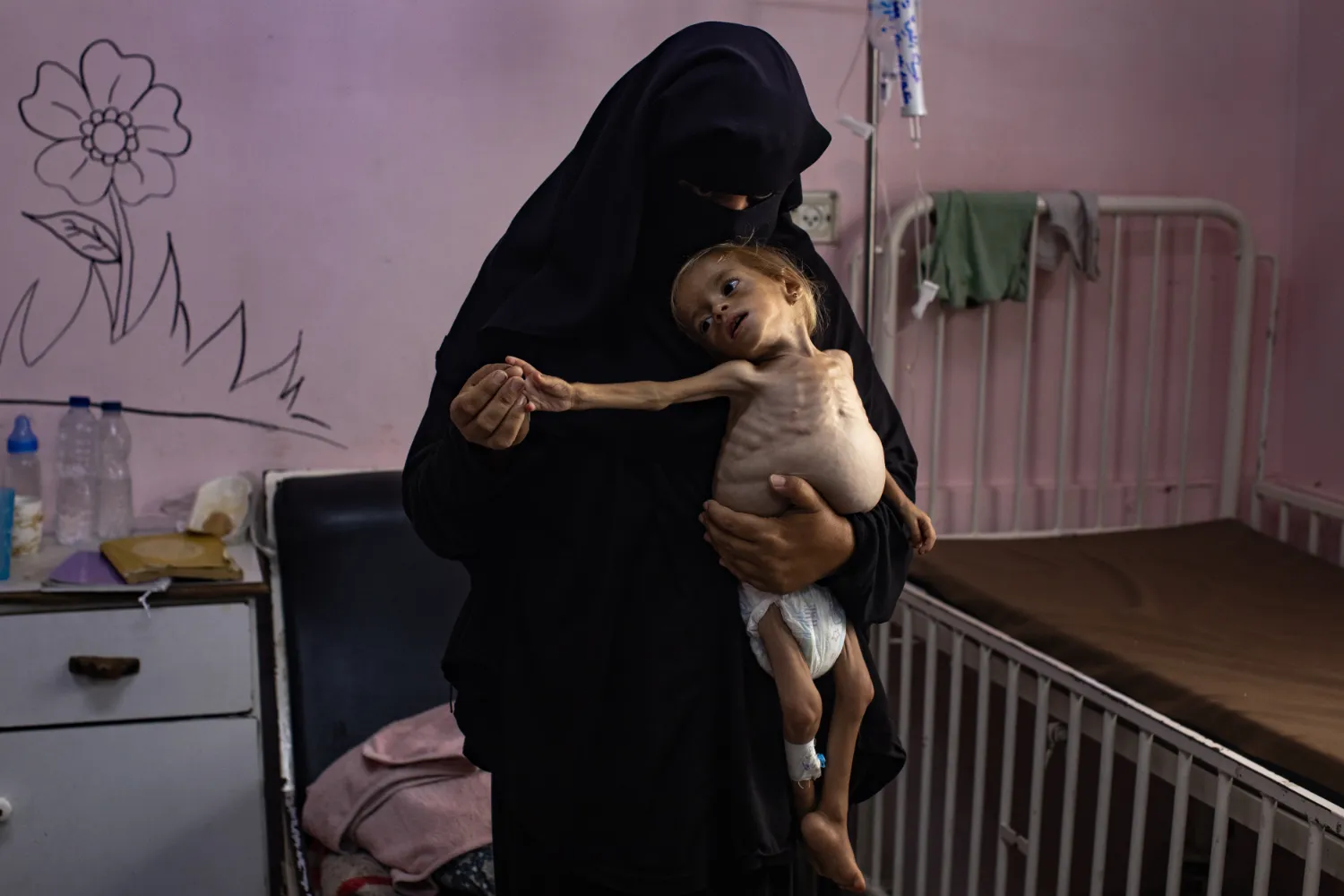
If human life is what we claim to value most, then honesty is required: the most decisive event of the year was, paradoxically, the institutionalized renunciation of its protection and care in the context of the genocide in Gaza.
As of December 30, according to figures published by the United Nations in its latest humanitarian bulletin, 71,266 fatalities and 171,222 injuries have been reported. Hundreds of thousands of Palestinians continue to struggle to survive in flooded, improvised tents or in damaged buildings at risk of collapse, while winter storms increase the likelihood of cold-related illnesses and preventable deaths — especially among children under the age of five. The most recent analysis further projects that by October of the coming year, at least 101,000 children between six and 59 months will suffer from acute malnutrition.
As historian Antonio Míguez Macho has noted, the gravity of this situation transcends statistics and touches the structural core of global politics: “A conviction for genocide or crimes against humanity does not save lives, but the very act of considering that a genocide is being committed or has been committed carries profound political implications.”
As if this were not enough, as we reported throughout the year in Dialektika, we are confronting a weakened and embattled global justice system. Prominent examples abound, but the accusations against prosecutor Karim Khan and the sanctions and defamation campaigns targeting Francesca Albanese, UN Special Rapporteur, are only two manifestations of this institutional assault. These developments do not occur in isolation, but against the backdrop of Russia’s invasion of Ukraine, the silenced conflict in Sudan, and numerous others across the globe. In short, we are witnessing a crisis in the global justice system and in the values on which it is founded. Many of the elements observed this year were not new, but in 2025 they acquired a devastating force.
2025: The Year of Trump’s Return
In terms of political conditions and international relations, the public event that most decisively shaped the year was the inauguration of Donald Trump as the forty-seventh president of the United States. The Trumpist shock and the renewed MAGA wave now present themselves with a defined project: transforming the United States into a global conservative experiment. Throughout the year, these elements took concrete form, sending shockwaves across the world; several governments in Latin America and Europe openly supported such initiatives. The outlook for 2026 suggests little change unless internal and external forces manage to halt their advance. Domestically, the midterm elections and the role of the Supreme Court will be decisive; internationally, much will depend on what organizations, media, and citizens can do to counter the extremist, ultraconservative, and irrational surge embodied in a fresh “Make the World Great Again.”
We have witnessed an assault on democracy as a system of values and a concerted offensive against migrants, where expulsion and the redefinition of control laws became the norm. The migrant was defined — not merely in theory, but in practice — as the violent “Other.” At the same time, the imposition of global tariffs became a mechanism for negotiation and the resolution of economic conflicts. We observed the consolidation of an “attention economy” built on shock, alongside an increasingly belligerent White House, symbolized by the renaming of the Department of Defense as the “Department of War,” extrajudicial attacks in the Caribbean, and the looming threat of yet another U.S. invasion in Latin America.
Trump’s return should be understood not as an isolated fact, but as a symptom: a symptom of the reconfiguration of the major tectonic plates of a rule-less geopolitics and of the erosion of the democratic order. What we face is not a classic coup d’état but an internal mutation: elected governments hollowing out institutions from within, turning legality into a technique of control, and transforming exception into the norm. Democracy does not simply fall; it hardens, becomes punitive, and turns exclusionary.
Trump’s return should be understood not as an isolated fact, but as a symptom: a symptom of the reconfiguration of the major tectonic plates of a rule-less geopolitics and of the erosion of the democratic order
Asked to reflect on this balance, Mexican philosopher Arturo Romero Contreras emphasizes that Trump’s reelection should not be read as an unexpected turn, but as confirmation that his first term was no historical accident:
“Trump’s return to the White House represents the revenge of the ancien régime. Defeated figures of relatively recent history are rehabilitated. Mussolini, Hitler, the Confederates, Pinochet — all are reintroduced into discourse as misunderstood heroes, buried by ‘cultural Marxism,’ ‘gender ideology,’ and the ‘woke’ world. Colonialism, slavery, and new discourses of cultural superiority are likewise reclaimed. Science loses its legitimacy and its right to govern social life. Egalitarian aspirations are discarded in favor of gendered, racial, and cultural hierarchies. Communist internationalism is confronted with furious nationalism. The secular world burns while summoning a zealous religiosity. Everything is condensed into the revived motto of homeland, God, and family.”
Yet the year that now concludes was also a cycle of protest. While significant attention was paid to the so-called “Generation G” as a mobilizing force, other popular sectors joined the wave of discontent in Nepal, Myanmar, Sri Lanka, and South Korea. The case of Serbia was paradigmatic: the student movement, nominated for the Nobel Peace Prize, demonstrated that hope has not vanished. Despite authoritarianism and corruption, a path toward future construction remains — long and difficult, but real.
Science, Technology, and Artificial Intelligence
In addition to the above, there is the ongoing frequency of natural disasters. The mega-fires in Los Angeles destroyed more than 12,000 structures, making them among the most costly disasters in U.S. history. Throughout 2025, global temperatures consistently exceeded the 1.5°C threshold above pre-industrial levels. Meanwhile, environmental diplomacy at COP30 in Belém produced mixed results, yielding to pressure from oil-producing countries and to the denialist stance of the U.S. administration. By contrast, China reported for the first time a genuine reduction of 1.6% in its CO₂ emissions, attributable to its extensive renewable energy infrastructure.
The year that now concludes also marked a scientific paradigm shift. Regenerative medicine reached a milestone with the normalization of xenotransplantation, achieving porcine organs functioning in human bodies for more than nine months, while CRISPR consolidated itself as an accessible therapeutic tool. In outer space, the privatization of exploration became tangible with the success of Blue Ghost, while the Vera Rubin Observatory and the MicroCarb satellite mapped the universe and carbon emissions with unprecedented precision. Renewable energy sources finally surpassed coal in the global power grid, supported by the deployment of small modular reactors (SMRs).
Yet the most disruptive advance occurred at the frontier of the synthetic, with the release of logical reasoning models such as GPT-5 and the growing adoption of agentic AI. This metamorphosis, combined with the integration of advanced vision systems into humanoid robotics, raises far more serious questions about the blurring boundary between data processing and physical action. It opens a chapter in which machines no longer merely process information, but actively interact with and transform our material environment. Is this not one of the defining paradoxes of 2025 — that the year of refined artificial intelligence was simultaneously the year of human redundancy in the labor market?
In sum, this was a year of ruptures and incessant hyper-novelty, in which the viscosity of the screen never detached itself from our gaze. At a deeper level, we are witnessing an ontological fracture that speaks to the subject’s fragility in Baumanian terms. On the one hand, an intensified concern with identity emerges, which in times of crisis seeks refuge in the rejection of the “Other,” generating heightened racial and nationalist conflict. Yet this redefinition occurs, paradoxically, at a moment of maximum fluidity: a fractured society attempting to complete itself through consumption and through formulas that seek to restore us as closed subjects.
Common Action
I do not intend to offer an abstractly optimistic conclusion. There are no magical formulas, no robots, no artificial intelligence capable of “saving” humanity in any eschatological sense. Humanity is not a story awaiting rescue by a deus ex machina, nor a narrative destined for a Netflix-style happy ending.
The only source of hope lies in a critically assumed past that allows us to leap into action. Yet again, from the pessimism of eternal return, we go back to what philosophy—precisely the mother of what we call critical thinking—has most valuable to offer. Not titles, not institutions saturated with bureaucracy, not empty discourse or abstract values. Rather, what one of the silent inspirations of this publication, the philosopher Humberto Piñera Llera, described as “the problematization of everything problematic.” That is, philosophy as the incessant movement of contradictions and their assumption — far removed from salvational and suffocating narratives.
In responding to these questions, Romero Contreras avoids any programmatic formulation. For him, hope is neither a content nor a promise, but a constitutive structure of human temporality. He therefore describes the future as “an effort to actualize the virtualities of the past beyond the pain of the present.” What remains, then, is a political path that is not unilateral:
“Concretely, we must participate in collective political action. It cannot be determined a priori whether such actions should take place ‘outside’ or ‘within’ the structures of established political life. Nor can they be decided in advance as either shallow and immediate change or profound and perhaps unrealizable transformation. The political path cannot be unilateral, choosing the purity of one extreme. But neither can it be ‘dialectical,’ if by that one means a ‘reconciliation of opposites.’ In politics, there is only a zigzagging path.”
Perhaps for this reason, as Zaharijević warns, the loss of care for life does not occur furtively or silently, but openly. With the disappearance of this principle, she notes, “the era of the petrification of inequalities is ready to begin.”
In the face of political violence and the evident regressions of 2025, what remains must be oriented toward reconstructing communal meaning and common action; toward cultivating nonconformity — never aligning ourselves with a state of affairs that undermines the collective. At Dialektika, we commit to rebuilding and founding anew, not through abstraction, but through the necessity of restoring a global system that places common action at the center of life.
This essay integrates original reflections expressly solicited from the philosophers Adriana Zaharijević and Arturo Romero Contreras, to whom we are deeply grateful for their generosity and the depth of their contributions. Editorial coordination and support throughout the preparation process were provided by Natzué Mendoza, editorial assistant at Dialektika.
Adriana Zaharijević is a senior researcher at the Institute for Philosophy and Social Theory at the University of Belgrade. Her work focuses on political philosophy, feminist theory, and the critique of contemporary nationalism.
Arturo Romero Contreras is Professor and Coordinator of the Master’s Program in Philosophy at the Benemérita Universidad Autónoma de Puebla (BUAP). His research centers on contemporary ontology, political philosophy, and the intersections of technology, artificial intelligence, and power.


